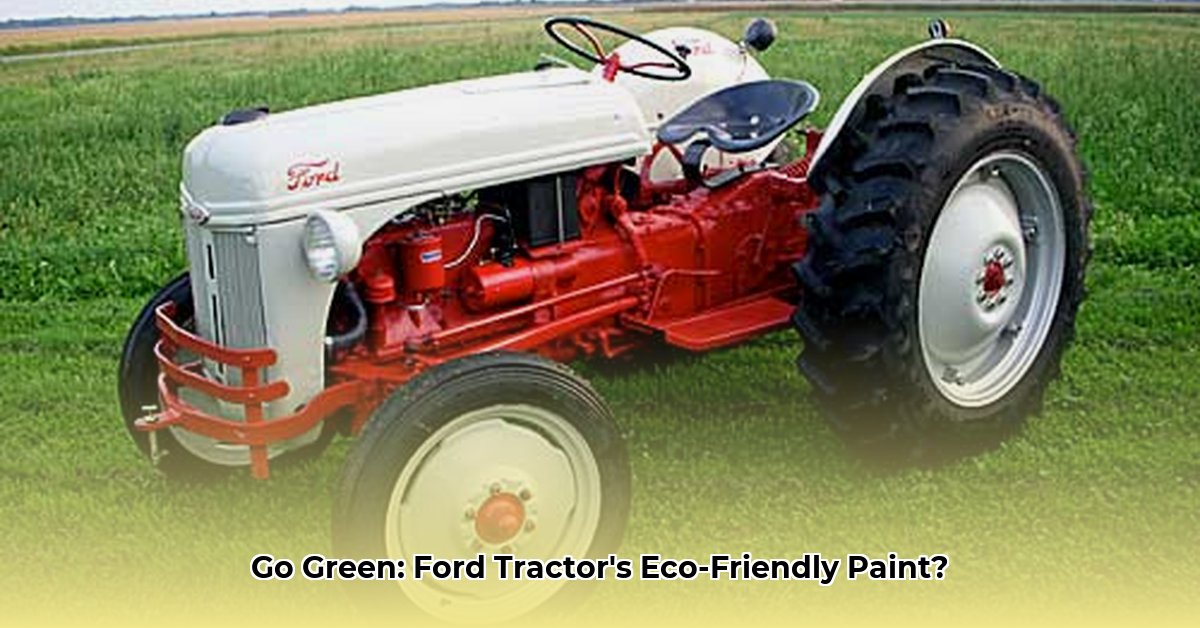
Choosing Eco-Friendly Paint for Your Ford Tractor
Keeping your Ford tractor in top condition isn't just about aesthetics; it's about making environmentally responsible choices. This guide helps you select eco-friendly red paint, ensuring a quality finish while minimizing your environmental footprint. We'll cover paint selection, application, and long-term sustainability. For more information on Ford tractor paint colors, check out this helpful resource: Ford Tractor Paint.
Key Considerations:
- Volatile Organic Compounds (VOCs): These airborne pollutants are common in traditional paints and contribute to air pollution. Lower-VOC paints are a greener alternative. (VOCs are chemicals that evaporate easily and can harm air quality).
- Life Cycle Assessments (LCAs): LCAs analyze a product's environmental impact throughout its entire lifespan, from production to disposal. While comprehensive LCAs for farm paints are scarce, demanding transparency from manufacturers is crucial. (An LCA is a comprehensive study of a product's entire environmental footprint).
- Sustainability: Consider the long-term cost-effectiveness of durable, eco-friendly paint, balancing upfront investment with reduced repainting needs over time.
Navigating the Paint Landscape
The market offers two primary types of farm implement paint: oil-based and water-based (or low-VOC) options. Oil-based paints, like Majic Tractor Truck Implement Enamel, often contain high levels of VOCs. Water-based or low-VOC paints from brands like Rust-Oleum offer a more environmentally friendly alternative, but comprehensive environmental data is often lacking. This lack of transparency makes informed decision-making challenging.
"The absence of readily available Life Cycle Assessments (LCAs) for many farm paints makes comparing environmental impacts difficult for farmers," says Dr. Emily Carter, Environmental Scientist at the University of California, Berkeley. "Demand for transparency from manufacturers is vital."
A Step-by-Step Guide to Greener Tractor Painting
Here's a practical approach to selecting and applying eco-friendly paint:
1. Demand Transparency: Request Safety Data Sheets (SDS) from paint manufacturers. These sheets detail ingredients, hazards, and VOC content. Compare SDSs from different brands to identify lower-VOC options. (SDSs provide detailed information on chemical composition and potential risks of a product).
2. Optimize Paint Usage: Precise measurements minimize waste. Proper surface preparation—cleaning and removing rust—improves adhesion and reduces paint needed. Consider using a paint sprayer for even application and reduced material usage.
3. Research Eco-Friendly Brands: Look for paints explicitly labeled as low-VOC, eco-friendly, or those with published LCAs. Support companies committed to sustainability.
4. Advocate for Change: Contact paint manufacturers and environmental agencies, expressing your desire for increased transparency and readily available environmental information. Farmers' collective voice influences industry practices.
Paint Choices: A Quick Comparison
| Feature | Majic Oil-Based Enamel | Rust-Oleum Specialty Gloss | Considerations |
|---|---|---|---|
| VOC Content | Typically High | Varies; Check the SDS | Higher VOCs mean greater air pollution; seek lower VOC options |
| Drying Time | Longer | Varies; Check the SDS | Impacts workflow; faster drying saves time |
| Durability | Variable; Check Manufacturer Info | Variable; Check Manufacturer Info | Affects long-term cost; durable paints reduce repainting needs |
| Environmental Impact | Potentially Higher | Needs More Information | Prioritize readily available environmental data |
Remember, even with limited LCA data, choosing lower-VOC paints significantly reduces your environmental impact. The long-term cost savings from reduced repainting also contribute to sustainable farming practices.
"Choosing sustainable paint isn't just about the environment; it’s about responsible farm management," notes John Miller, a farmer from Iowa with over 20 years of experience. "The long-term cost benefits often outweigh the initial investment."
Beyond the Paint: Sustainable Farming Practices
Choosing eco-friendly paint is one step towards sustainable agriculture. Other practices, such as soil conservation and reduced chemical usage, contribute to a holistic approach. Combined, these efforts create a healthier environment for your farm and the planet.